
Analysis
Picture a rack of GPUs with their fans roaring and their work queues half empty. Plenty of compute, and it is still waiting for data.
That is the problem in a technical essay published by SK hynix on October 29. The author is Younghyun Kim, a professor at Hanyang University ERICA, and the views are his. This is not an announcement of a shipping SK hynix product.
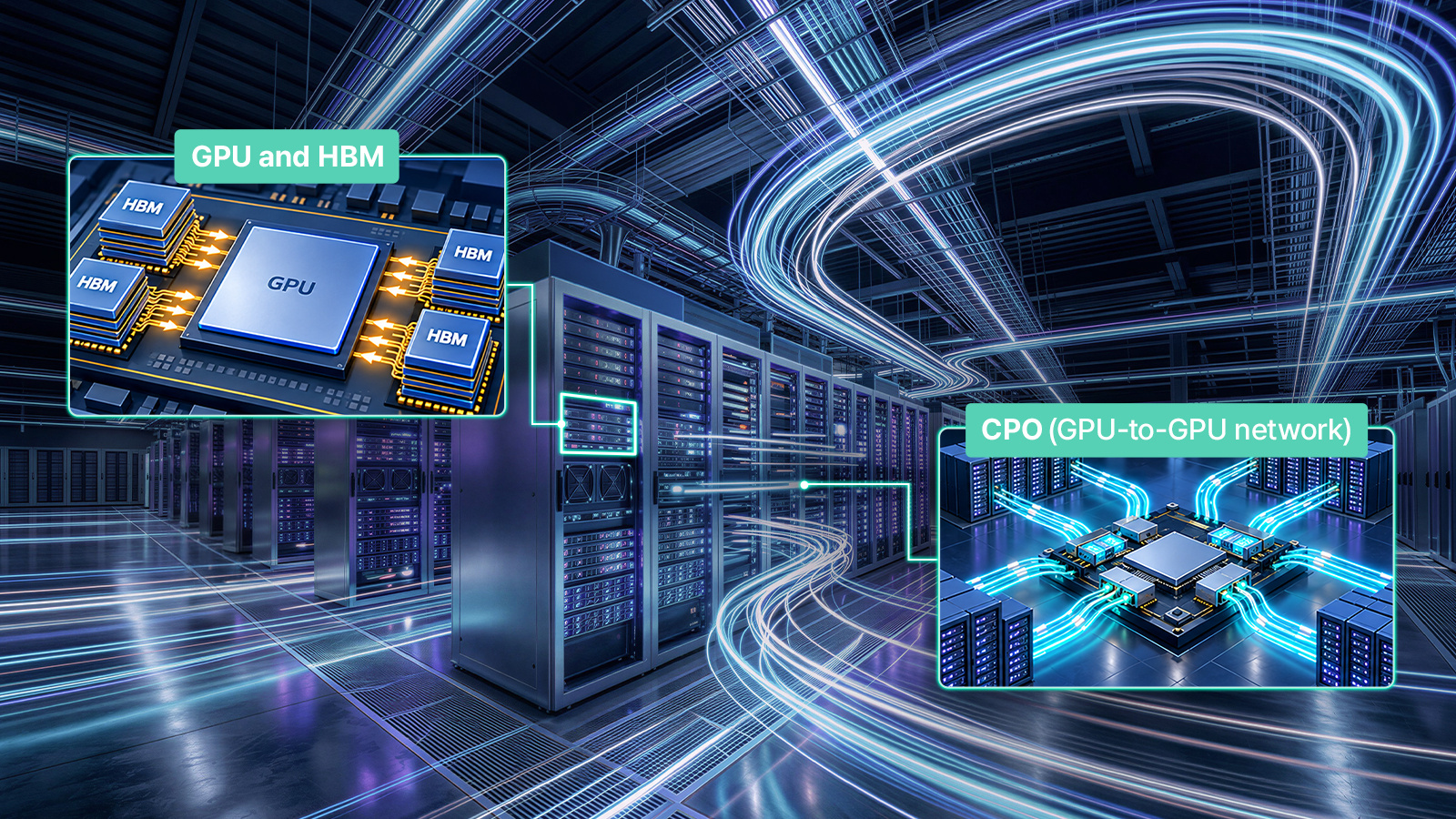
Kim describes silicon photonics and co-packaged optics (CPO) as ways to improve data movement. CPO puts optical engines beside a switch chip on a common package. That shortens the electrical path before the data travels through fiber. The essay pairs this with high-bandwidth memory sitting next to a GPU. The two address different parts of the trip: one is the network between machines, the other is the memory feeding a single chip.
That distinction is the useful part. A machine stalled on local memory and a cluster stalled on a network exchange are different faults, and fixing one will not cure the other. A faster link is no universal multiplier for every workload on the same hardware.
The essay also lists the unglamorous constraints: heat, fiber connections, manufacturing yield and repair. It notes alternative optical packaging approaches too. It does not supply a buyer's answer for any particular installation, and no independent benchmark backs it.
So the test sits with you. Map where your workload spends time and power before choosing which link to replace. Then ask the dull questions: how much useful work finishes, how does power change, and what happens when an optical part needs service? Change one condition at a time, on your own traffic.
Source: [Tech Note] Why does AI still have to wait with tens of thousands of GPUs? How silicon photonics and CPO are building the highways of light · 2026-10-29
Why it matters
Buyers who know where their system actually waits can judge any faster-link claim against their own workload rather than a peak bandwidth number.