

Analysis
When public money pays for research, what turns the files into something another team can actually reuse? Our reading is that publishing research does not make it usable. Documentation, formats and licences decide whether public funding leaves behind reusable tools.
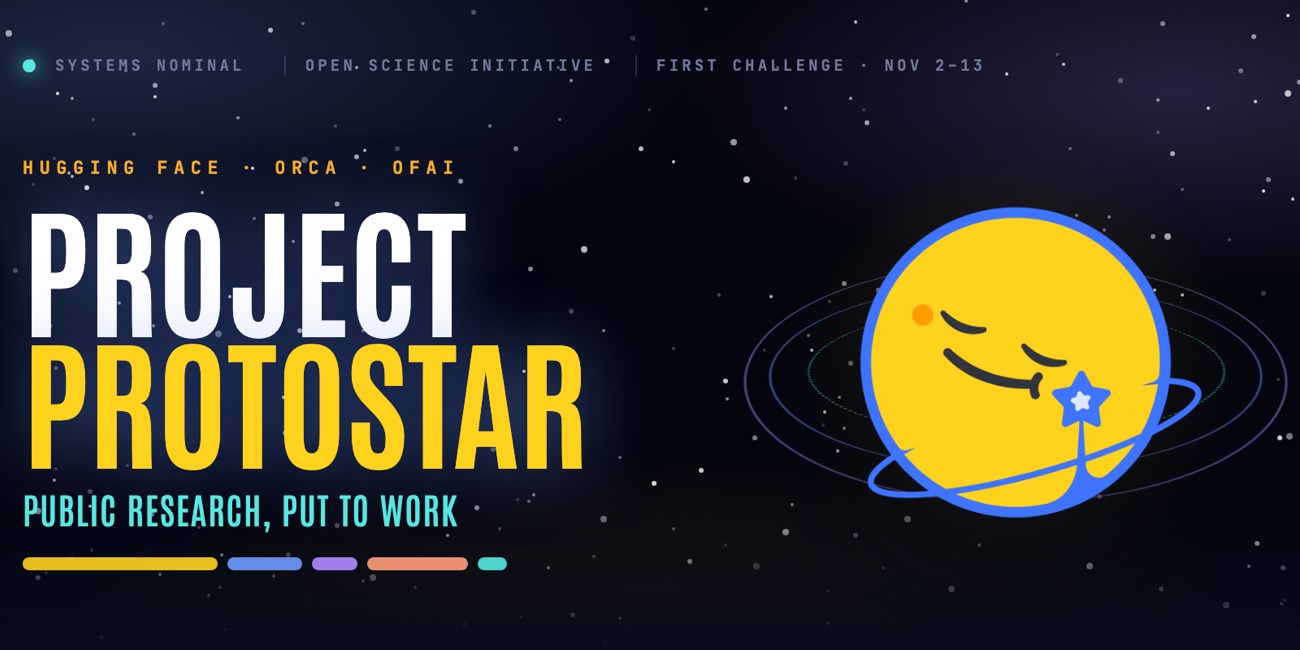
ProtoStar aims to make publicly funded datasets, models and code easier to find and reuse for artificial intelligence (AI). Founding partners with Hugging Face include Carnegie Mellon, Purdue, Georgia Tech, Arizona State and George Washington University through the Open Forum for AI, plus the Astera Institute and the Open Research Community Accelerator.
Carnegie Mellon's Climate Risk Intelligence Challenge, running November 2 to 13, is the first experiment. The method is a clean held-out test: teams use weather records from 210 U.S. cities through 2018 to forecast four indicators, including the hottest day of the year, for 2019 to 2026 against statistical baselines. I have a soft spot for a contest built to test whether AI beats a baseline rather than assuming it does.
Right now, ProtoStar is a sensible commitment, not a result. Institutions join through memoranda of understanding, and the challenge has not begun, so no outcomes exist. Here is what even a strong forecast will not tell us: beating baselines on four weather indicators in 210 U.S. cities does not generalise to other fields or prove universities have changed routine releases.
Two signals would turn promise into evidence: early 2027 forecasts that beat those baselines on the held-out years, and partners routinely shipping full documentation, usable formats and clear licences.
Source: Announcing Project ProtoStar: Making Publicly Funded Science AI-Ready · 2026-10-29
Why it matters
In the Journal's reading, documentation, formats and licences decide whether public money produces public tools, and ProtoStar is a first attempt to test that.