
Analysis
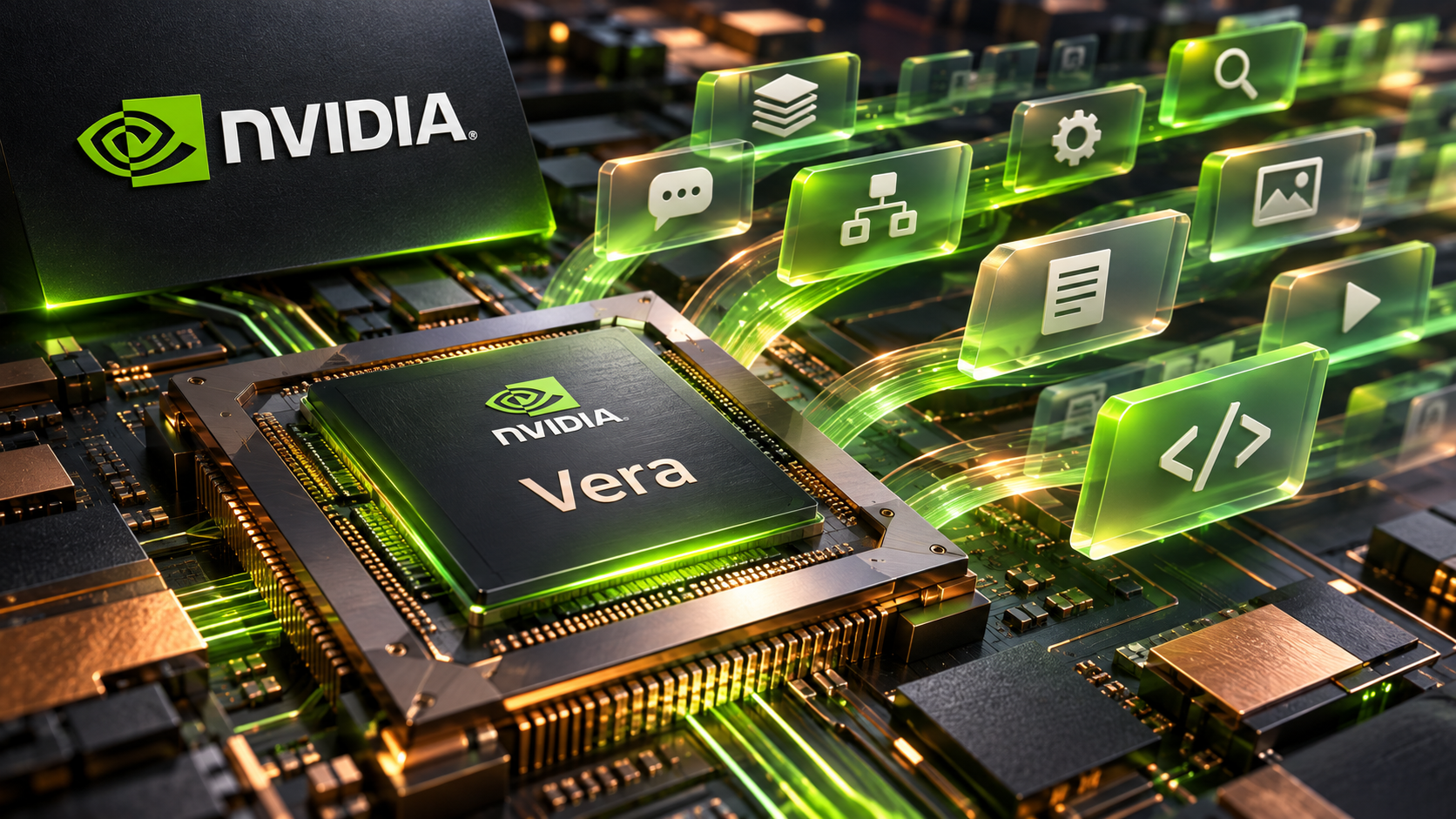
NVIDIA’s November 5 Vera article argues that agent workloads require attention to the CPU as well as GPU reasoning. It describes agents searching for information, querying databases, running code and taking actions: steps that rely on CPU execution between model operations.
The company presents Vera as a way to combine fast individual agents with higher capacity within a fixed power budget. Its comparisons and performance claims are NVIDIA’s own. They describe particular workloads and configurations rather than establishing the performance of every customer application.
An agent service is a chain of operations, and acceleration in one component does not guarantee a matching improvement in the complete task. Teams assessing hardware can first identify where their own jobs wait: model generation, tool execution, data access or coordination. A representative workload and an explicit power or cost constraint make a comparison more useful than a headline speed claim. Vendor benchmarks are a starting point for that assessment, not a substitute for it.
Source: Primary source: blogs.nvidia.com · 2026-11-05
Why it matters
Infrastructure choices should follow measured task bottlenecks and operating constraints, rather than treating every agent workload as the same kind of GPU problem.