
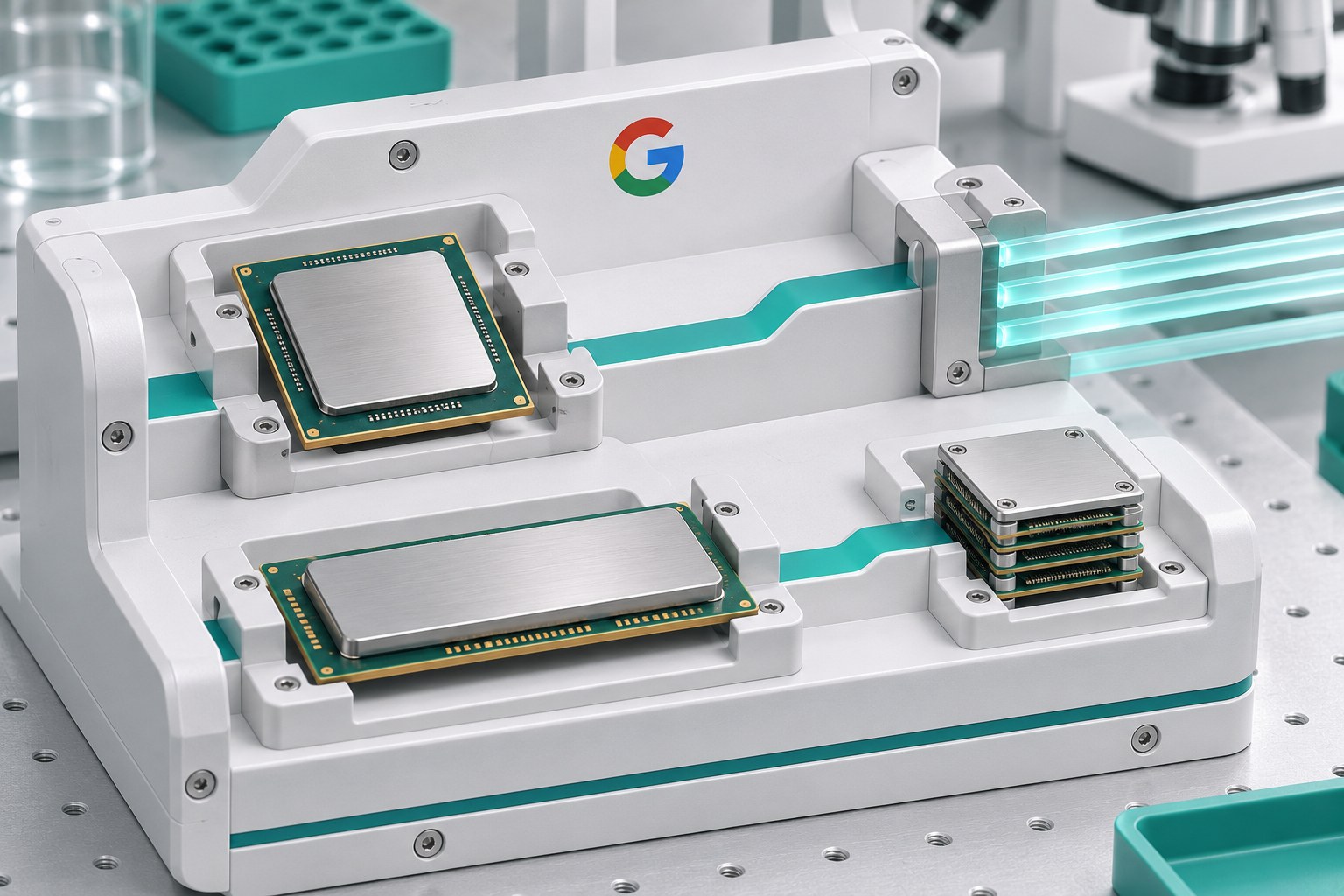
What each chip is for
A general-purpose accelerator is a compromise you rent by the hour. Google is now offering two fewer compromises. TechCrunch reports that the company has added two specialized tensor processing units to its AI hardware line, broadening the portfolio to more use cases. It names the two: confidential model training, and more memory capacity.
Take the second first, because it is the one this desk keeps coming back to. Memory, not raw compute, is usually where a job gets stuck. A chip sold on capacity is an admission that some models and some context windows simply do not fit, and that customers would trade speed for room. Sensible. The question is how much room, at what bandwidth, and what it does to the price of an hour. The summary gives none of those.
The first is harder to weigh from a headline. 'Confidential training' normally means the data and weights stay protected even from the operator of the machine, enforced in hardware. That is a claim about a whole installation: the chip, the firmware, the attestation service and whoever holds the keys. The chip is one component of it. The Journal has read TechCrunch's headline and summary only; chip names, availability and performance figures are not in what we saw.
The test to run
If either chip is aimed at your workload, ask for it on your own job. For the memory part, run the model that doesn't fit today and note what you gave up in throughput. For the confidential part, ask to see the attestation report and who can verify it without Google's help. Then check the region list. A chip that exists in one data centre is a pilot.